 +86 (028) 8535 5966
 +86 17323184180
 irvotex@votinfrared.com
 Links
Links

What NETD Sensitivity Boosts IRVOTEX Hunting Detection
2025/12/25When we evaluate thermal performance in outdoor environments, we often begin by examining how NETD sensitivity influences the clarity of small temperature differences. This factor determines whether subtle heat signatures appear clearly enough for accurate interpretation, especially in complex terrain. For users relying on a thermal imaging monocular, improved sensitivity allows distinctions between background and target that might otherwise blend together. As a company focusing on professional outdoor applications, IRVOTEX places strong emphasis on helping users understand why NETD directly supports reliable detection in low-contrast situations such as dense vegetation or early-morning observation.
Why NETD Performance Matters in Practical Hunting
During field operations, the terrain, vegetation density, and environmental moisture often shift rapidly, creating conditions where thermal contrast becomes uneven. A device used as a thermal monocular for hunting must reveal clear visual transitions even when these changes reduce heat differentiation. Lower NETD values contribute to improved consistency by enhancing the visibility of soft gradients around animals or partially hidden objects. From our long-term assessment work, we see how this sensitivity enables users to maintain a steady interpretation of movement patterns, body outlines, and position relative to surroundings. NETD therefore serves not only as a technical indicator but also as a practical measure of how reliably a hunter can read real-time thermal information across varying conditions.
NETD Sensitivity Reflected in the SMART Series Design
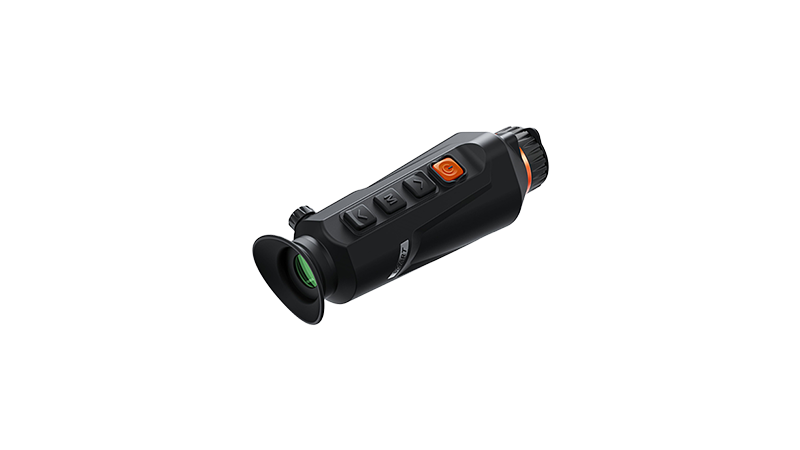
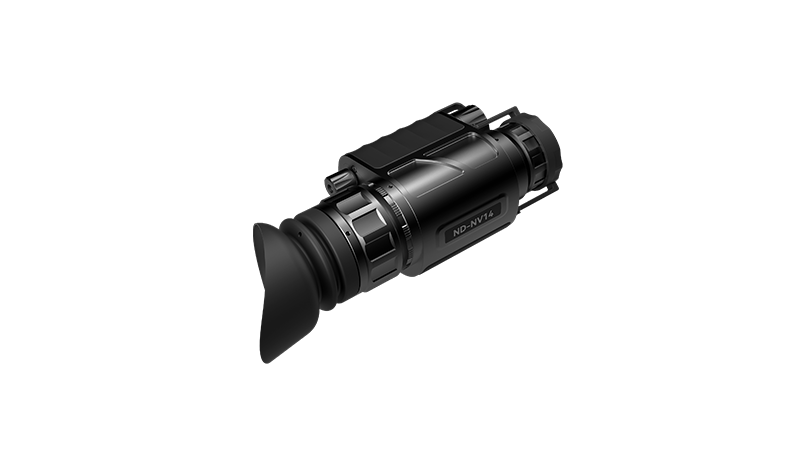
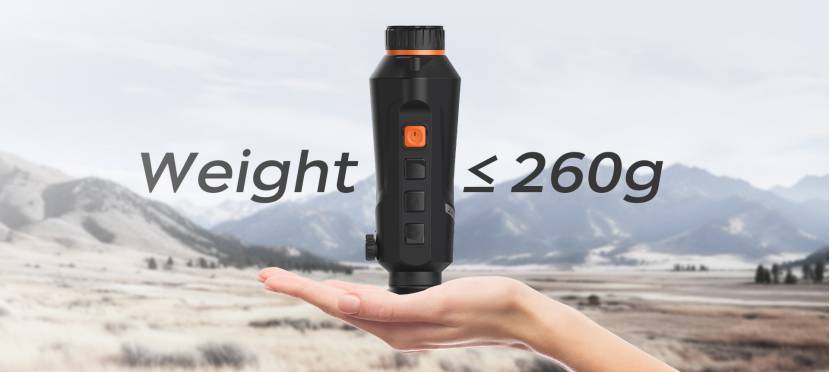
As we developed the SMART Series, our focus extended beyond sensor performance to the structural characteristics that support stable thermal imaging. The unit’s 260g magnesium alloy housing makes extended tracking less fatiguing, while the optimized internal layout supports consistent temperature management. This stability helps preserve uniform NETD performance over long sessions. The device’s compact profile also improves grip steadiness, further enhancing the clarity gained from increased sensitivity. Through continuous testing across wooded areas, plains, and humid valleys, we have seen how lower NETD values contribute to smoother detail transitions and better detection of low-contrast features, especially when wildlife blends into complex natural backgrounds.
Conclusion: How NETD Sensitivity Strengthens Our Detection Approach
As we refine our thermal solutions, NETD sensitivity remains one of the most influential elements shaping detection quality. It determines how effectively faint signals translate into actionable visual information, especially under challenging environmental conditions. Whether users employ a thermal imaging monocular for general observation or rely on a thermal monocular for hunting during precise detection tasks, NETD plays a central role in ensuring consistent visibility. Through the design philosophy of the SMART Series, we demonstrate how balanced engineering and improved sensitivity work together to provide dependable performance from first scan to final identification in the field.


